Ambient AI
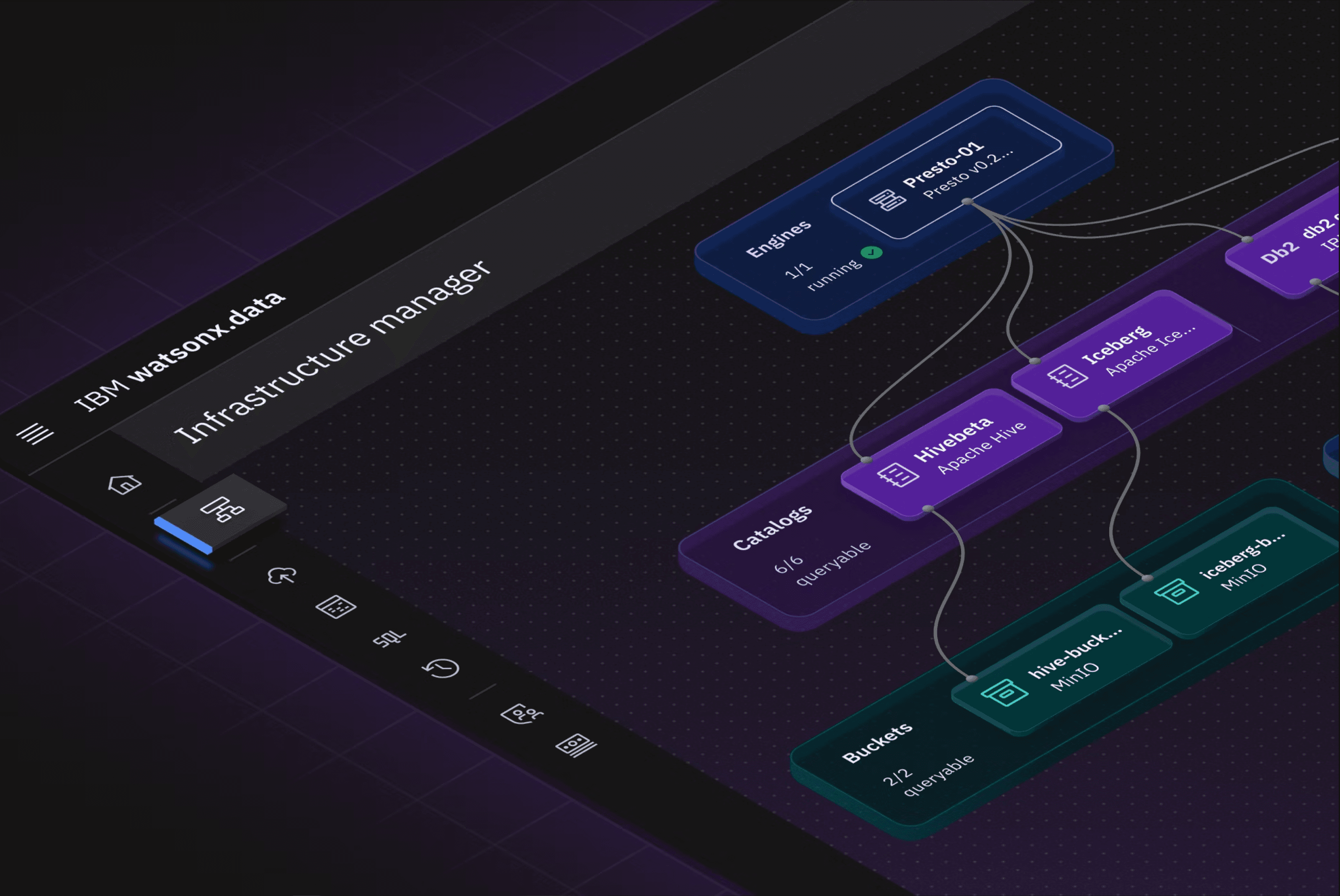
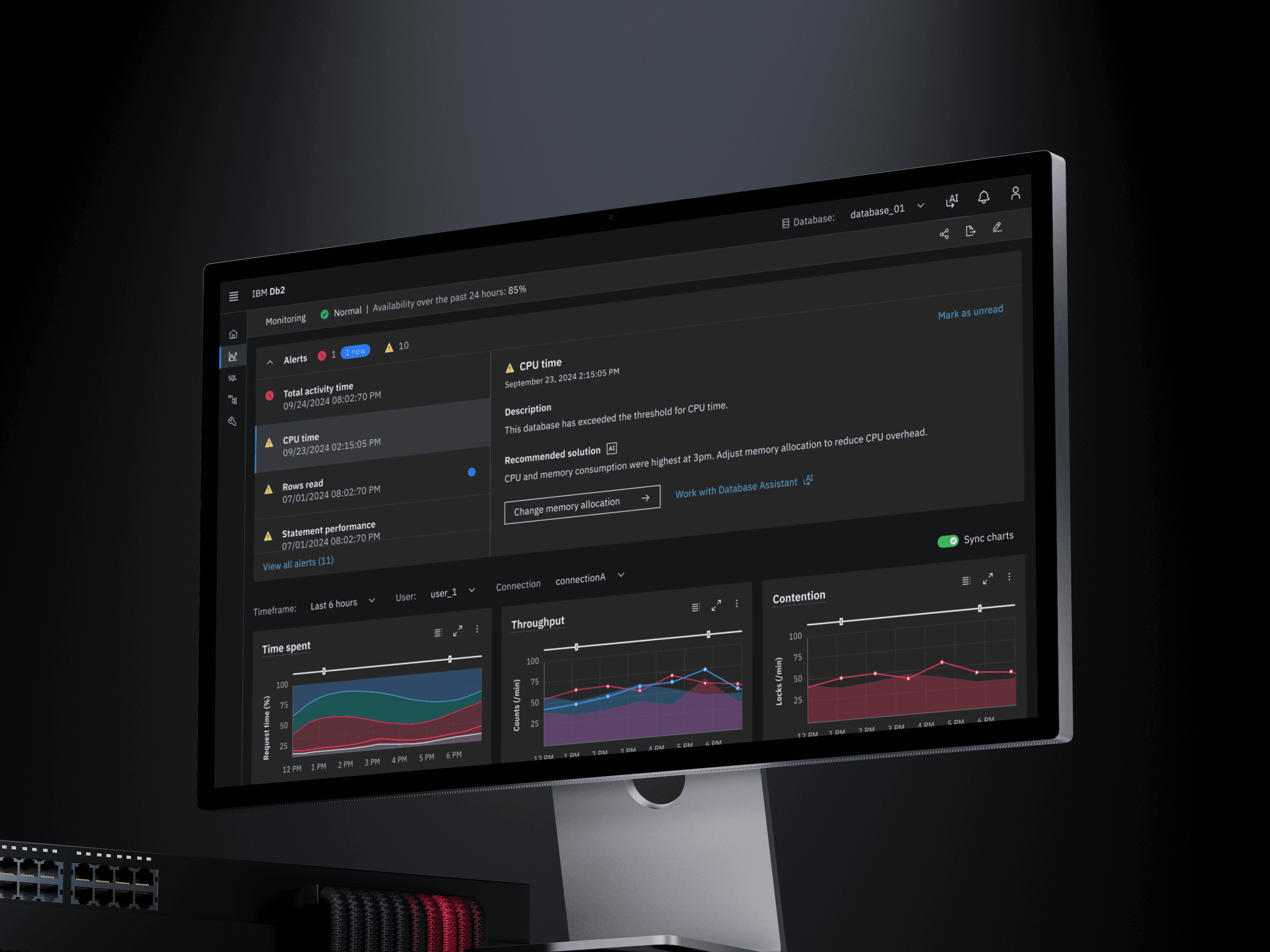
Ambient AI was an eight-week exploration with the IBM Carbon for AI team. We were looking at how AI might move beyond chat and become a quieter part of the product experience. My part of the project focused on context. I explored what the system could realistically notice across a watsonx.data workflow, how signals might change depending on the user and situation, and how the product could respond without adding more noise. The work led to several early directions, including a context layer, a signal-based assistant concept, and Focus Mode.
Team
IBM Carbon for AI team
Timeline
8 Weeks
Role
Role
Interaction Designer
Interaction Designer


Beyond chat
At the time, most AI experiences in enterprise products still lived inside a chatbot or assistant panel.
I started by looking at how systems in 'Her' and 'Blade Runner 2049' use environmental and behavioral signals to support people quietly. It helped me define the 'Context Layer'—where technology moves from being a tool to being a responsive environment. These systems felt quiet, well-timed, and built into the environment. That became a useful reference for thinking about what “ambient” could actually mean in product design.
Beyond chat
At the time, most AI experiences in enterprise products still lived inside a chatbot or assistant panel.
I started by looking at how systems in 'Her' and 'Blade Runner 2049' use environmental and behavioral signals to support people quietly. It helped me define the 'Context Layer'—where technology moves from being a tool to being a responsive environment. These systems felt quiet, well-timed, and built into the environment. That became a useful reference for thinking about what “ambient” could actually mean in product design.

Building the context layer
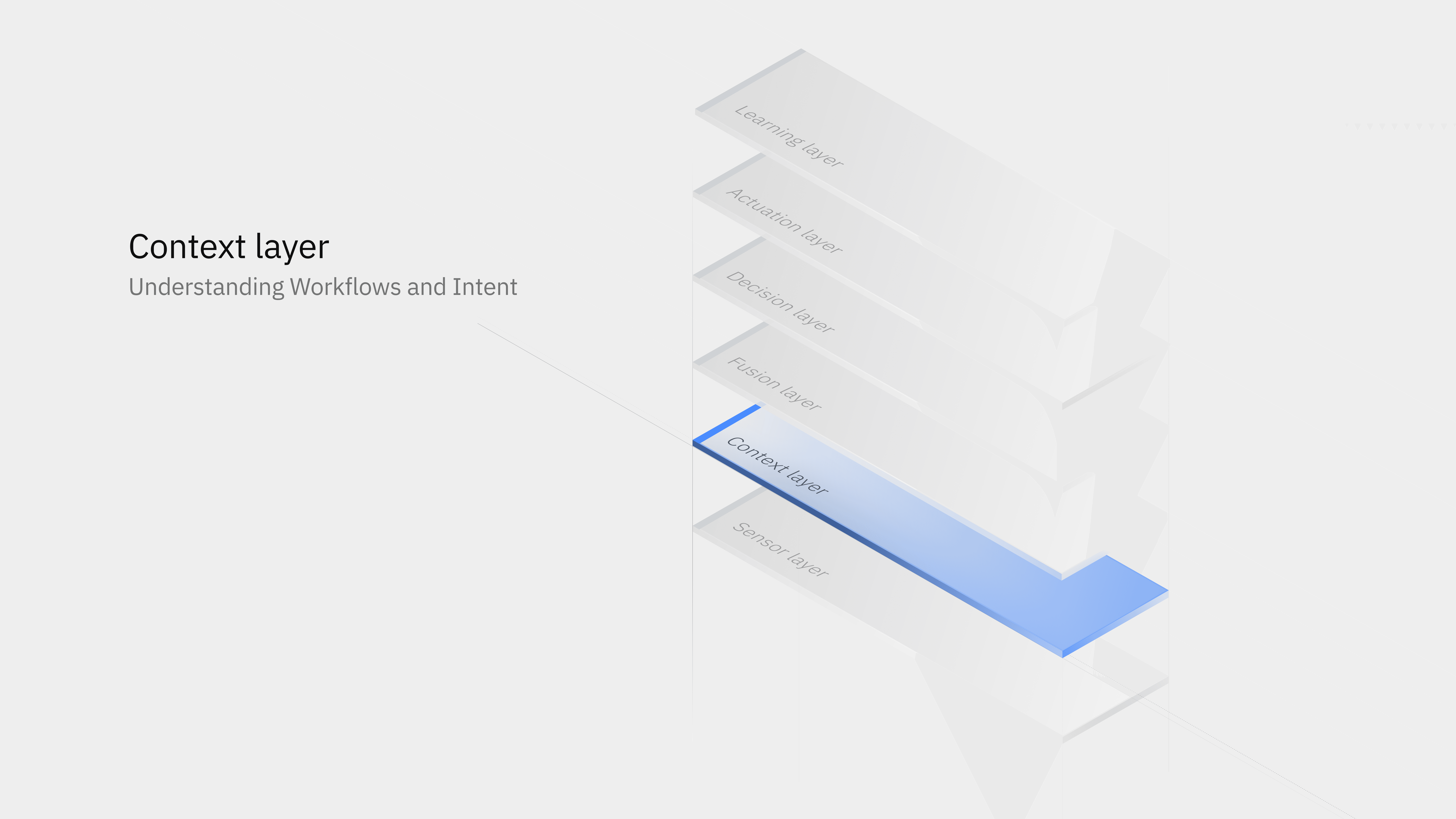
My part of the work focused on signals: what the system might realistically notice, and how those signals could help the system understand what a user needed.
I mapped signal types across a watsonx.data workflow, looking at things like repeated actions, pauses, time-based patterns, and system events. A single signal rarely means much by itself, but once combined with others, it starts to show whether someone might be stuck, exploring, or concentrating.
Building the context layer
My part of the work focused on signals: what the system might realistically notice, and how those signals could help the system understand what a user needed.
I mapped signal types across a watsonx.data workflow, looking at things like repeated actions, pauses, time-based patterns, and system events. A single signal rarely means much by itself, but once combined with others, it starts to show whether someone might be stuck, exploring, or concentrating.
Designing for enterprise context
One thing that became clear quickly was that the same signal can mean very different things depending on the user.
A failed query from a junior user may mean they need help or reassurance. The same pattern from an Admin (Senior) may point to debugging or optimization. I used that idea to explore how role, permissions, and risk could shape system behavior, so responses felt more appropriate to the situation instead of one-size-fits-all.
Designing for enterprise context
One thing that became clear quickly was that the same signal can mean very different things depending on the user.
A failed query from a junior user may mean they need help or reassurance. The same pattern from an Admin (Senior) may point to debugging or optimization. I used that idea to explore how role, permissions, and risk could shape system behavior, so responses felt more appropriate to the situation instead of one-size-fits-all.

Early direction
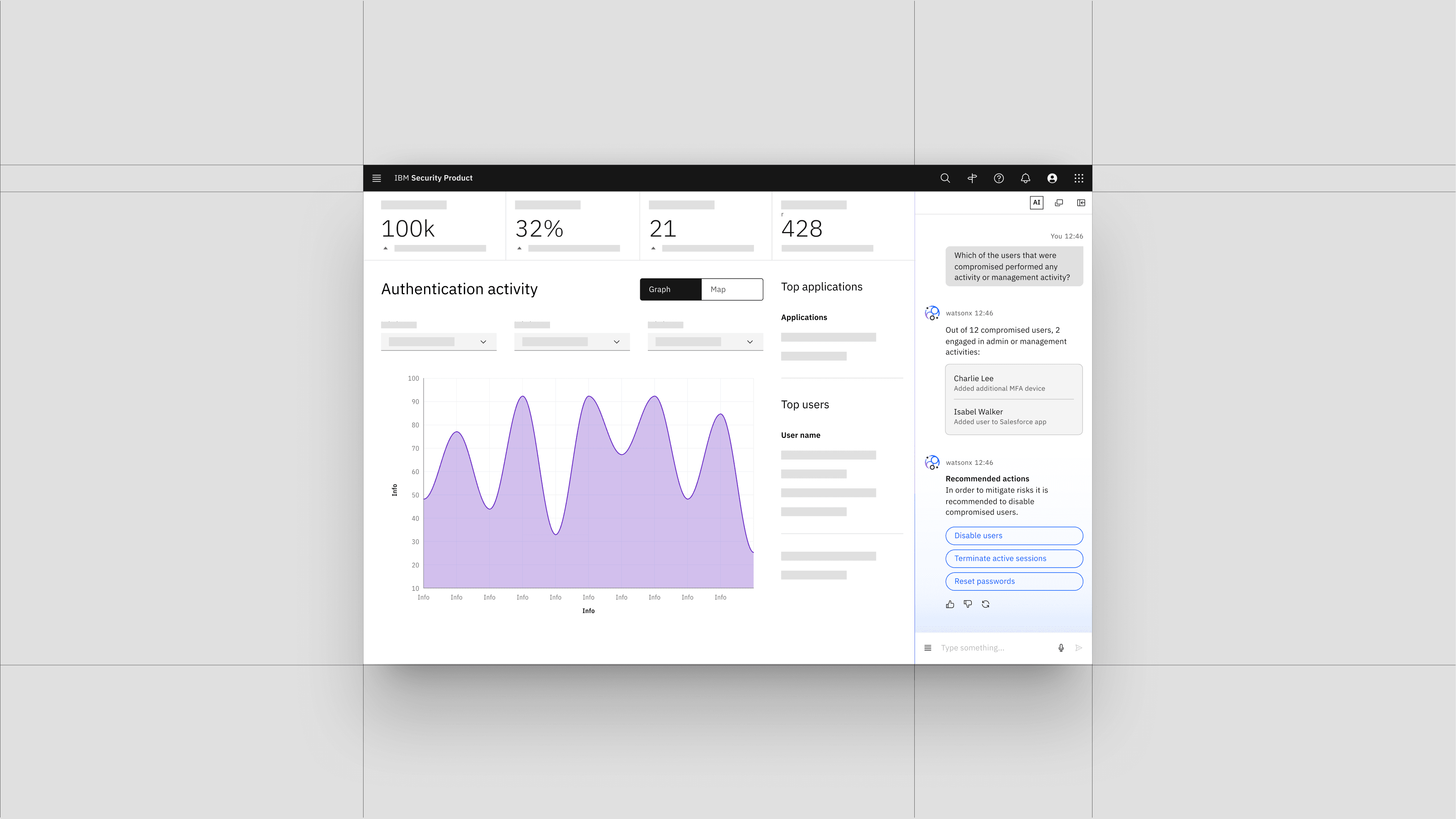
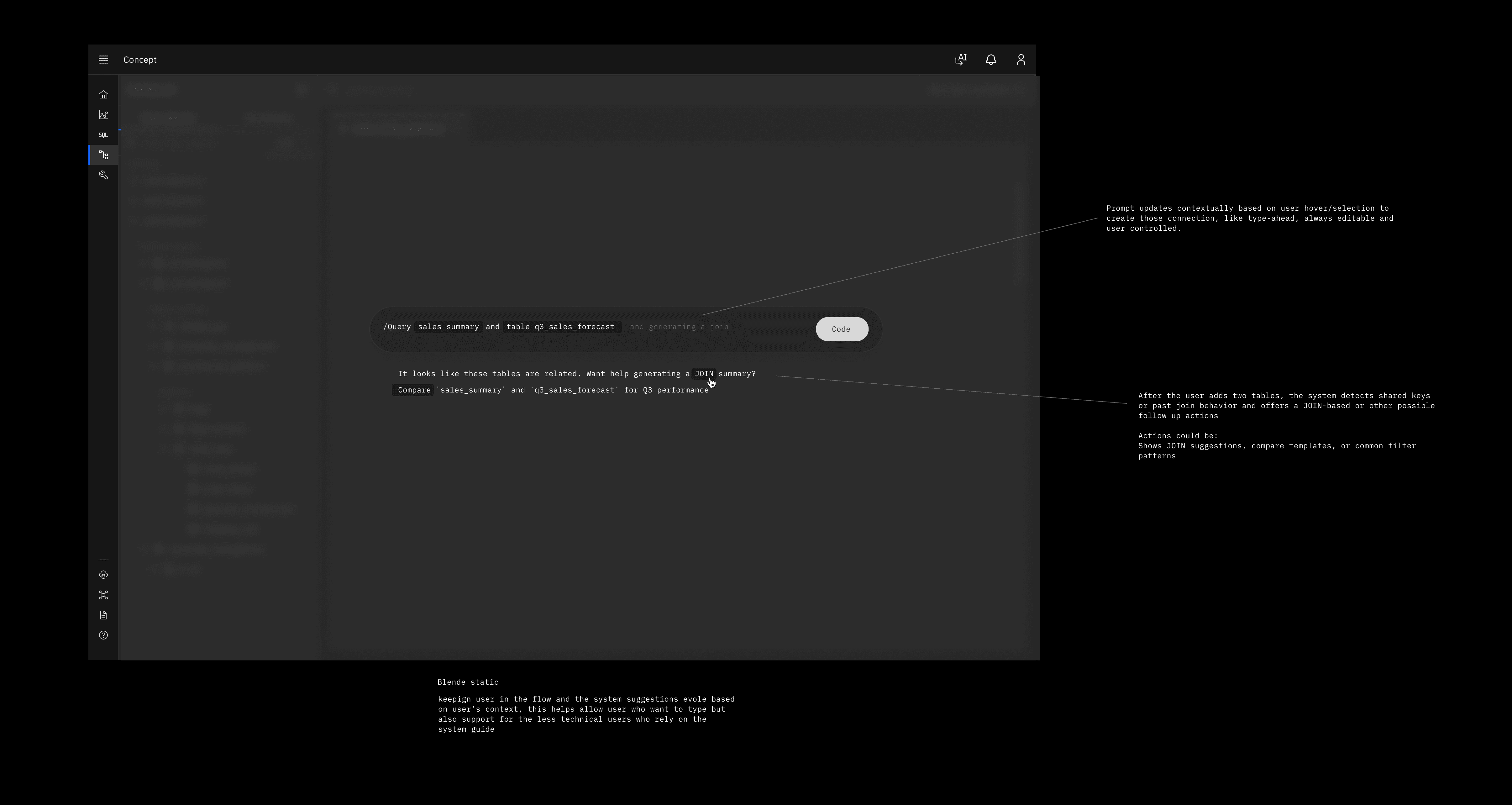
One early concept used a blended signal chat to surface help based on what the system understood about the user’s activity. It made the assistance visible, but it still asked the user to stop and engage with another interface.
That raised a basic question:
If the user still has to leave their work and talk to the AI, is it really ambient?
This pushed the exploration away from another assistant surface and toward changes within the product environment itself.nt.
Early direction
One early concept used a blended signal chat to surface help based on what the system understood about the user’s activity. It made the assistance visible, but it still asked the user to stop and engage with another interface.
That raised a basic question:
If the user still has to leave their work and talk to the AI, is it really ambient?
This pushed the exploration away from another assistant surface and toward changes within the product environment itself.nt.
Focus Mode
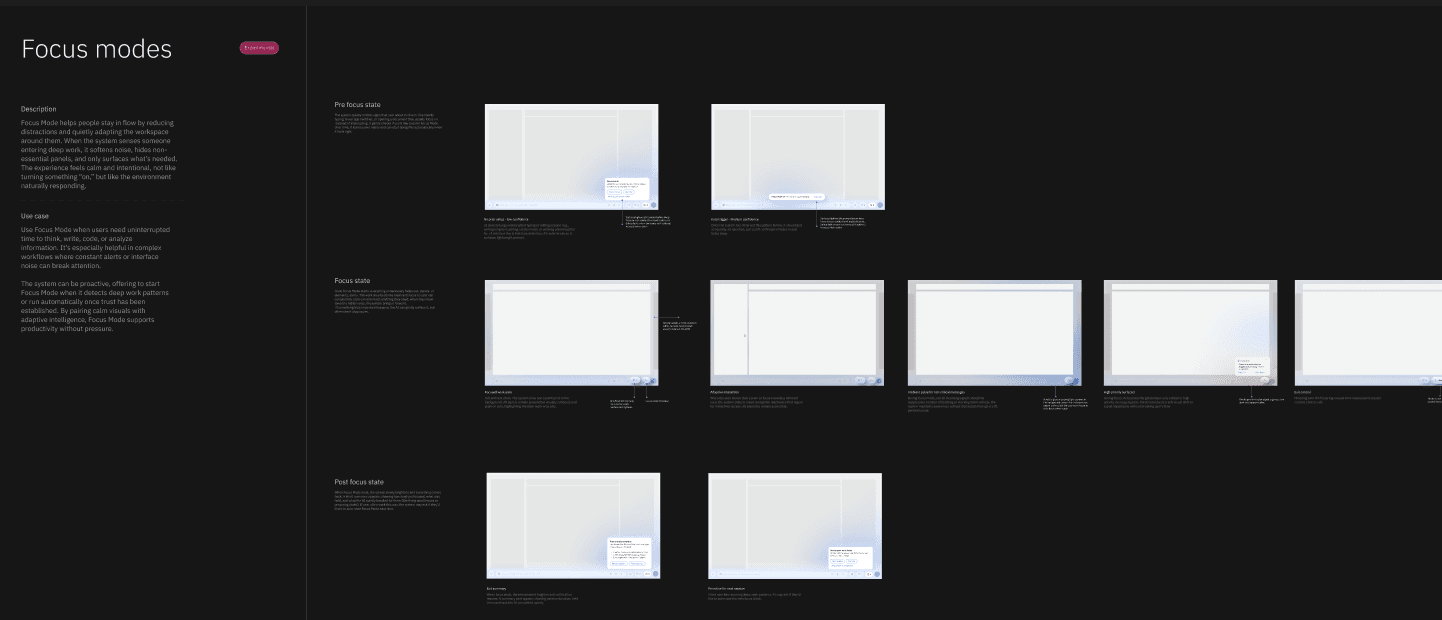
That led to Focus Mode, which became the strongest direction from my work on the project. Instead of giving users another thing to interact with, the system would notice signs of deep work and respond by reducing noise in the workspace. Non-essential panels could fade back, lower-priority updates could wait, and urgent information could stay visible without taking over the screen.
I explored how this would work across three stages
- Pre-focus
- Active focus
- Post-focus state.
The goal was not for the system to decide that it knew exactly what the user was feeling. It was to offer a quieter workspace at a moment when it might be useful, while keeping the experience optional and easy to exit.
Focus Mode
That led to Focus Mode, which became the strongest direction from my work on the project. Instead of giving users another thing to interact with, the system would notice signs of deep work and respond by reducing noise in the workspace. Non-essential panels could fade back, lower-priority updates could wait, and urgent information could stay visible without taking over the screen.
I explored how this would work across three stages
- Pre-focus
- Active focus
- Post-focus state.
The goal was not for the system to decide that it knew exactly what the user was feeling. It was to offer a quieter workspace at a moment when it might be useful, while keeping the experience optional and easy to exit.
Outcome
The project helped the team develop a shared direction for how ambient behavior might work across IBM products.
My exploration contributed a way to think about context signals, role-based differences, and how the interface could respond without adding another layer of interruption.
I left the project before the work moved into deeper testing and implementation, so the concepts remained exploratory. However, the work continued to influence conversations around proactive AI behavior and product-level context.
Reflection
This project changed how I thought about AI interaction. I began thinking more about how the product itself could behave over time, when it should stay quiet, and when it should become more present.
It also made me more aware of how easily a context-aware system can feel helpful in one moment and intrusive in another.
Outcome
The project helped the team develop a shared direction for how ambient behavior might work across IBM products.
My exploration contributed a way to think about context signals, role-based differences, and how the interface could respond without adding another layer of interruption.
I left the project before the work moved into deeper testing and implementation, so the concepts remained exploratory. However, the work continued to influence conversations around proactive AI behavior and product-level context.
Reflection
This project changed how I thought about AI interaction. I began thinking more about how the product itself could behave over time, when it should stay quiet, and when it should become more present.
It also made me more aware of how easily a context-aware system can feel helpful in one moment and intrusive in another.
Outcome
The project helped the team develop a shared direction for how ambient behavior might work across IBM products.
My exploration contributed a way to think about context signals, role-based differences, and how the interface could respond without adding another layer of interruption.
I left the project before the work moved into deeper testing and implementation, so the concepts remained exploratory. However, the work continued to influence conversations around proactive AI behavior and product-level context.
Reflection
This project changed how I thought about AI interaction. I began thinking more about how the product itself could behave over time, when it should stay quiet, and when it should become more present.
It also made me more aware of how easily a context-aware system can feel helpful in one moment and intrusive in another.
Other Cases
Other Cases