IBM Db2
Database administrators managing enterprise Db2 environments face a constant flood of alerts with no clear signal for what needs attention first. I led the AI interaction design for a new alert management experience that helps DBAs cut through the noise, prioritize with confidence, and resolve issues faster. The work focused on a core design challenge: how do you get highly skeptical, expert users to trust and act on AI recommendations when the stakes are high.
Team
Db2 Team
Timeline
2024-2025
Role
Role
AI Product Designer
AI Product Designer
Challenge
DBAs managing large-scale databases face a constant flood of alerts with no clear signal for what needs attention first. Every alert feels urgent, but acting on the wrong one, or missing the right one, can have serious consequences. The existing experience put the burden of prioritization entirely on the user.
Challenge
DBAs managing large-scale databases face a constant flood of alerts with no clear signal for what needs attention first. Every alert feels urgent, but acting on the wrong one, or missing the right one, can have serious consequences. The existing experience put the burden of prioritization entirely on the user.
Approach
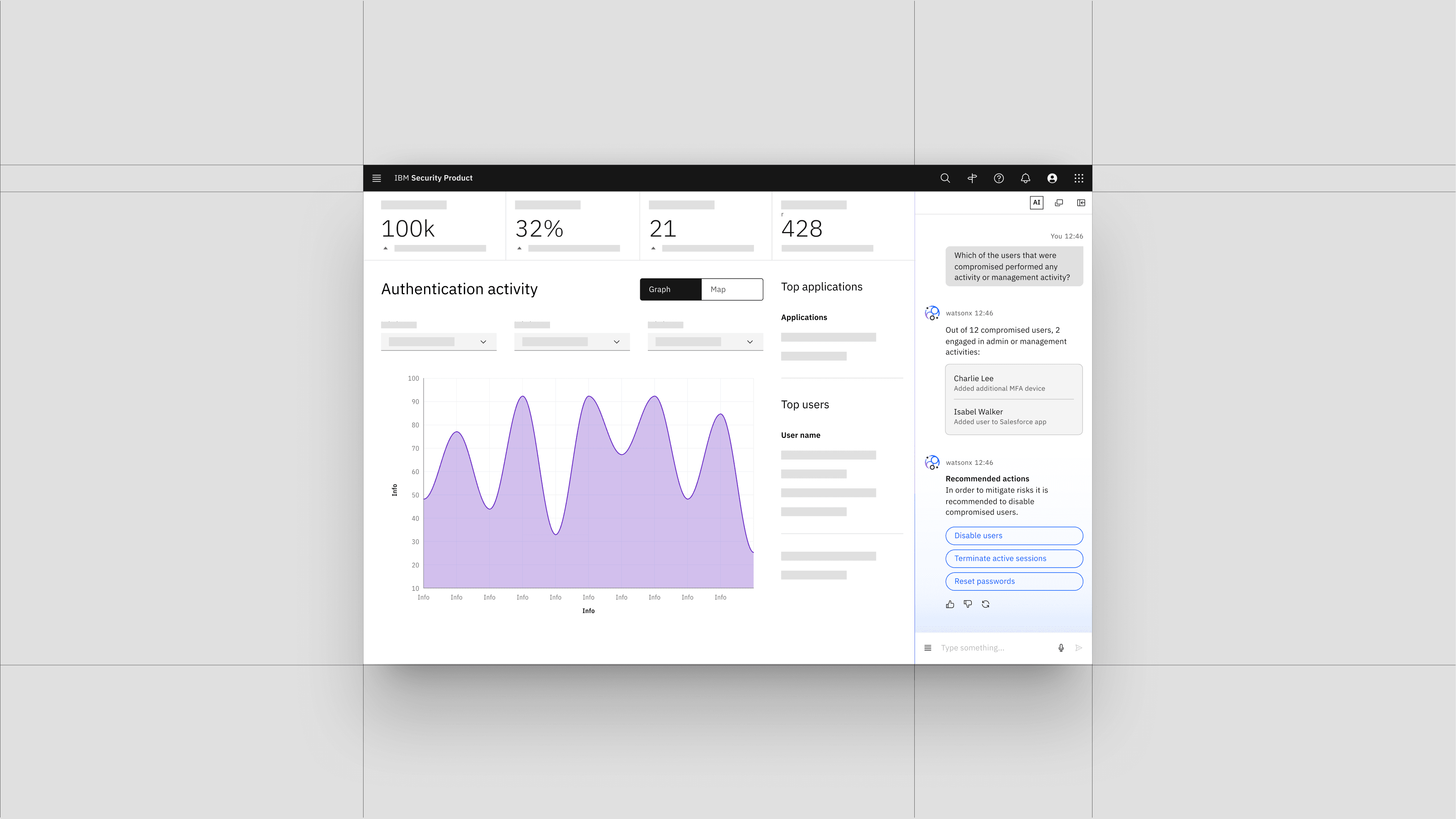
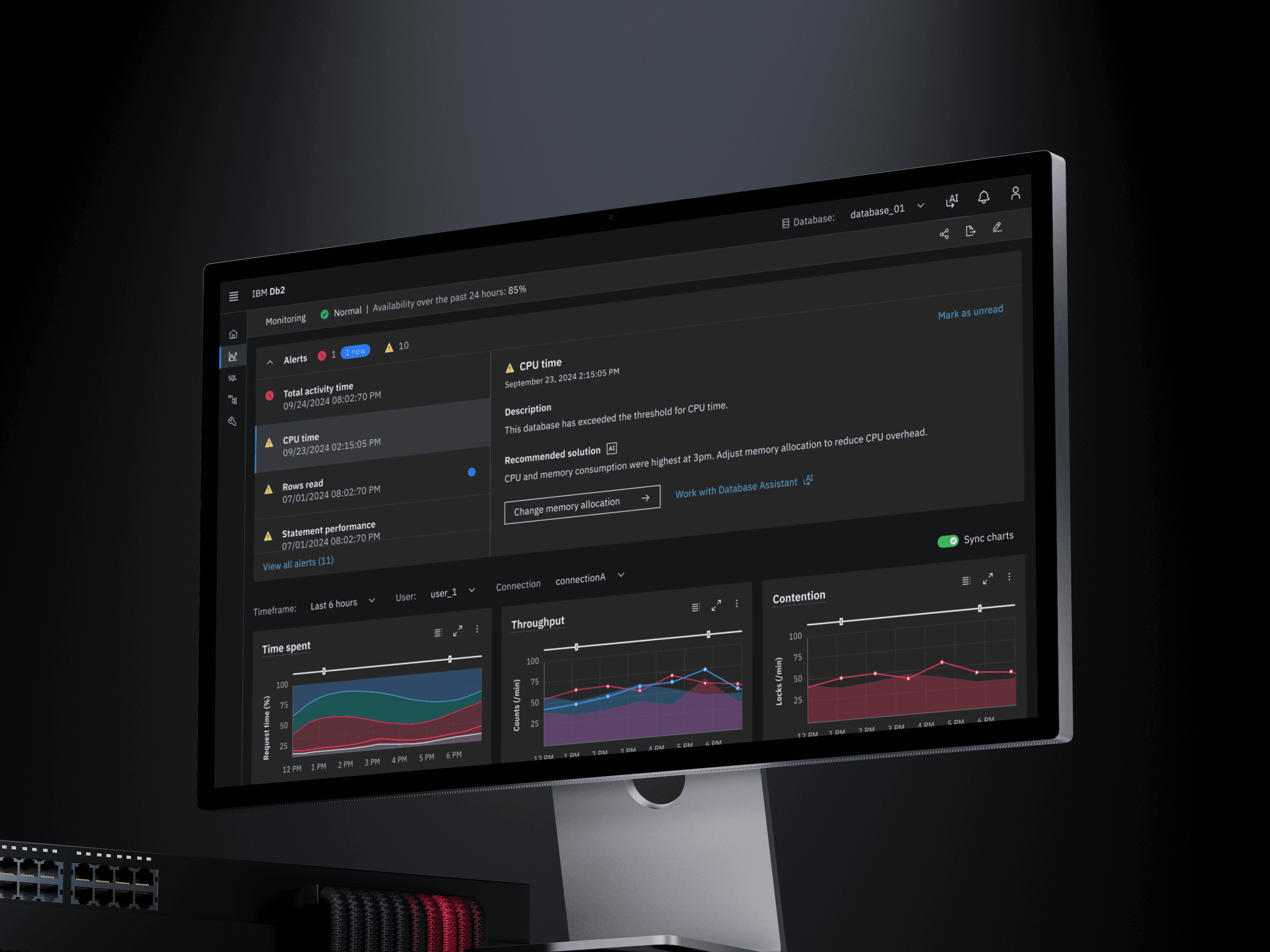
I led the AI interaction design, focusing on three layers. First, an AI-generated summary that surfaces the core issue, its likely impact, and a recommended direction, written to be enough on its own. Second, a priority ranking that orders alerts by urgency and business impact so administrators know where to start without having to read everything. Third, a contextual chart, selected dynamically based on the alert type, that gives the right data to verify the AI's reasoning without forcing users to dig through raw logs.
The core design question throughout was: how do you make someone trust a recommendation when the stakes are high and their instinct is to check everything themselves? The answer was transparency at every layer, not just telling users what to do, but showing them why.
Approach
I led the AI interaction design, focusing on three layers. First, an AI-generated summary that surfaces the core issue, its likely impact, and a recommended direction, written to be enough on its own. Second, a priority ranking that orders alerts by urgency and business impact so administrators know where to start without having to read everything. Third, a contextual chart, selected dynamically based on the alert type, that gives the right data to verify the AI's reasoning without forcing users to dig through raw logs.
The core design question throughout was: how do you make someone trust a recommendation when the stakes are high and their instinct is to check everything themselves? The answer was transparency at every layer, not just telling users what to do, but showing them why.
Outcome
The design direction was carried forward and shipped as part of IBM's Db2 Genius Hub. The platform now delivers up to 30% reduction in time to resolution and 30% reduction in manual intervention, with the same human-in-the-loop transparency principles I established during the design phase. Learn more from the official IBM product page
Outcome
The design direction was carried forward and shipped as part of IBM's Db2 Genius Hub. The platform now delivers up to 30% reduction in time to resolution and 30% reduction in manual intervention, with the same human-in-the-loop transparency principles I established during the design phase. Learn more from the official IBM product page
Other Cases
Other Cases