Teri Tesla App
Teri is a third-party iOS app for Tesla owners. As the sole designer, I helped shift the product from a passive data tracker into a more useful ownership companion. My work focused on turning complex battery and vehicle signals into clear guidance, timely automation, and actionable next steps that support long-term vehicle health.
Team
Developers, Founder
Timeline
2025
Role
Role
Solo Product Designer (End-to-end)
Solo Product Designer (End-to-end)

The Business Challenge
Third-party Tesla apps often struggle with long-term retention because raw vehicle data loses novelty over time. Through research, I found that users did not just want more metrics. They wanted help understanding whether something was normal, what was causing it, and what they should do next.
This shifted the product direction from passive monitoring to guided maintenance: helping users protect battery health, reduce anxiety, and build better ownership habits.
The Business Challenge
Third-party Tesla apps often struggle with long-term retention because raw vehicle data loses novelty over time. Through research, I found that users did not just want more metrics. They wanted help understanding whether something was normal, what was causing it, and what they should do next.
This shifted the product direction from passive monitoring to guided maintenance: helping users protect battery health, reduce anxiety, and build better ownership habits.
Education Through Action
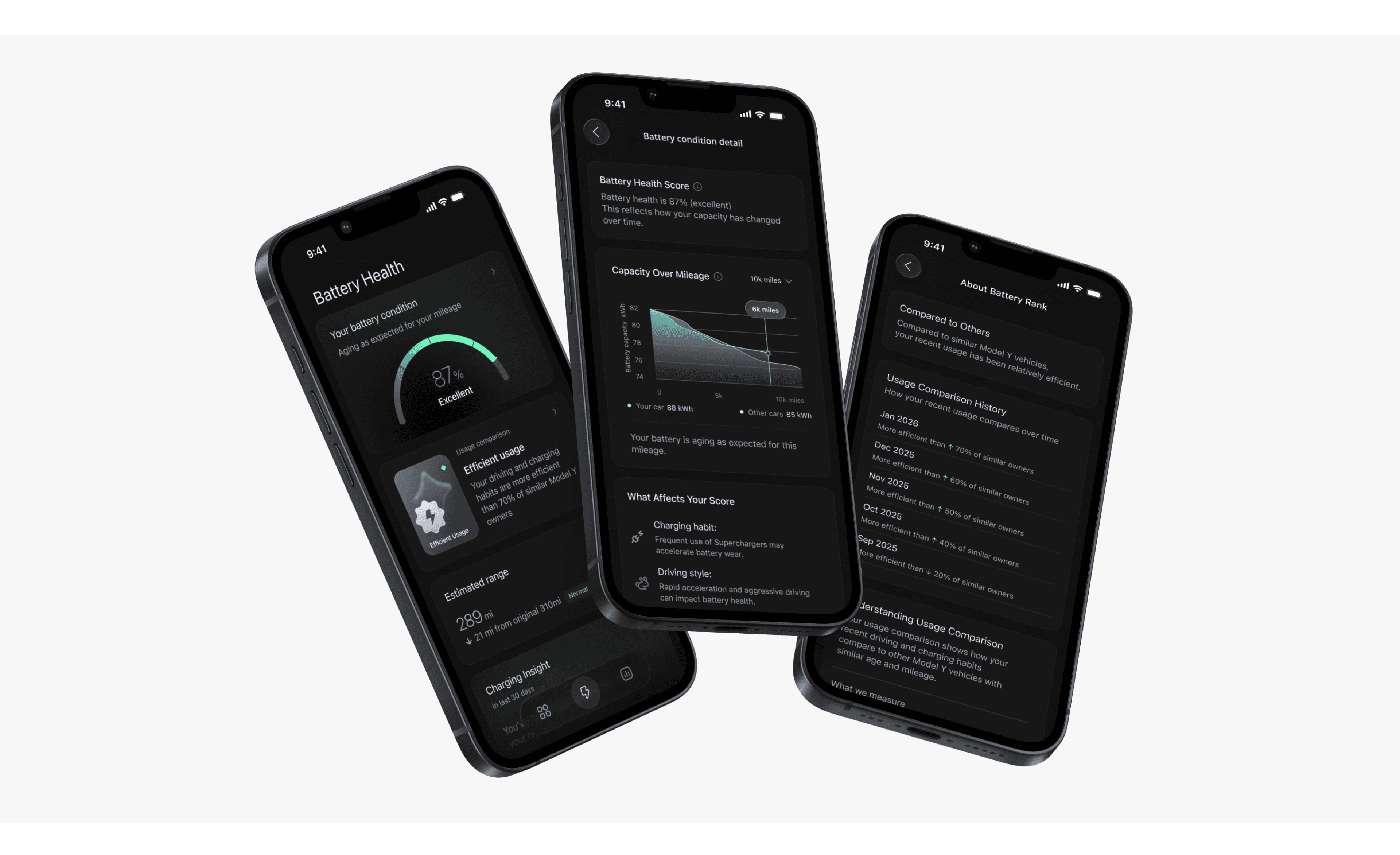
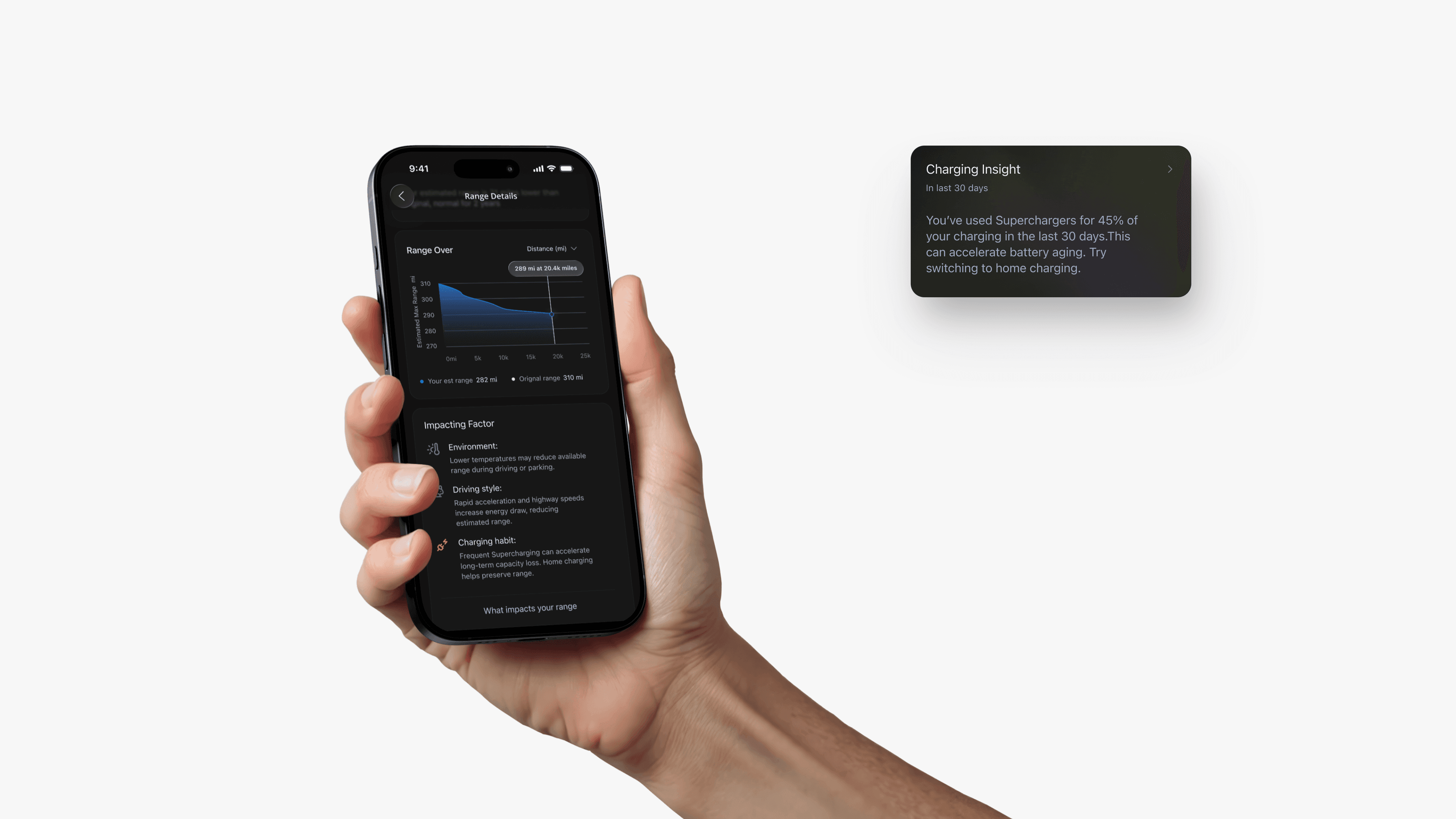
Data is only useful when it helps users understand what to do next. For Teri, I designed the battery experience to move beyond passive reporting and turn complex battery signals into clear, practical driving habits.
Explaining the cause
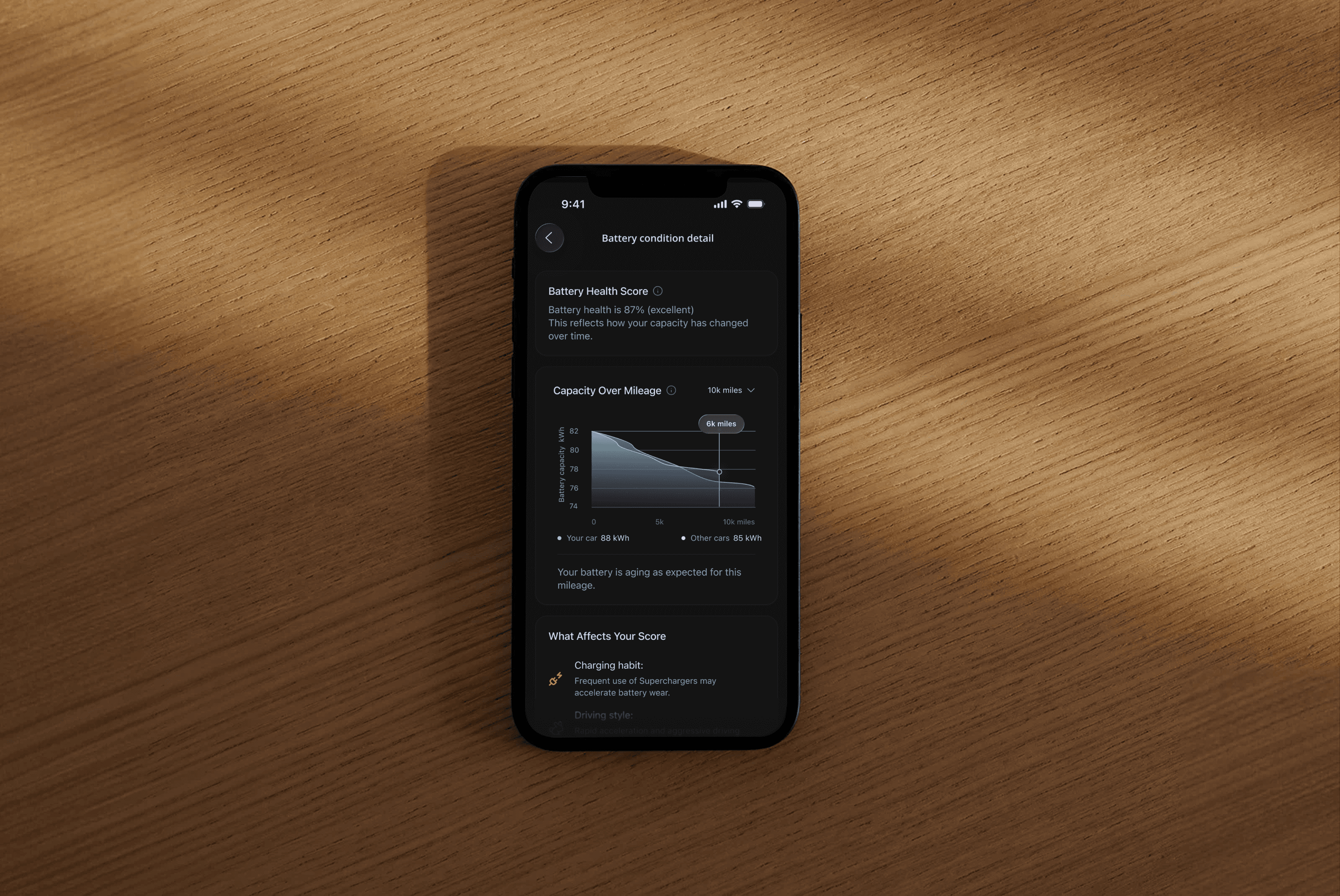
Instead of only showing a drop in range, the experience helps users understand what may be affecting their specific car, such as weather, charging habits, or driving behavior. By showing the likely cause, the product reduces the mystery around battery degradation.
Guiding the next step
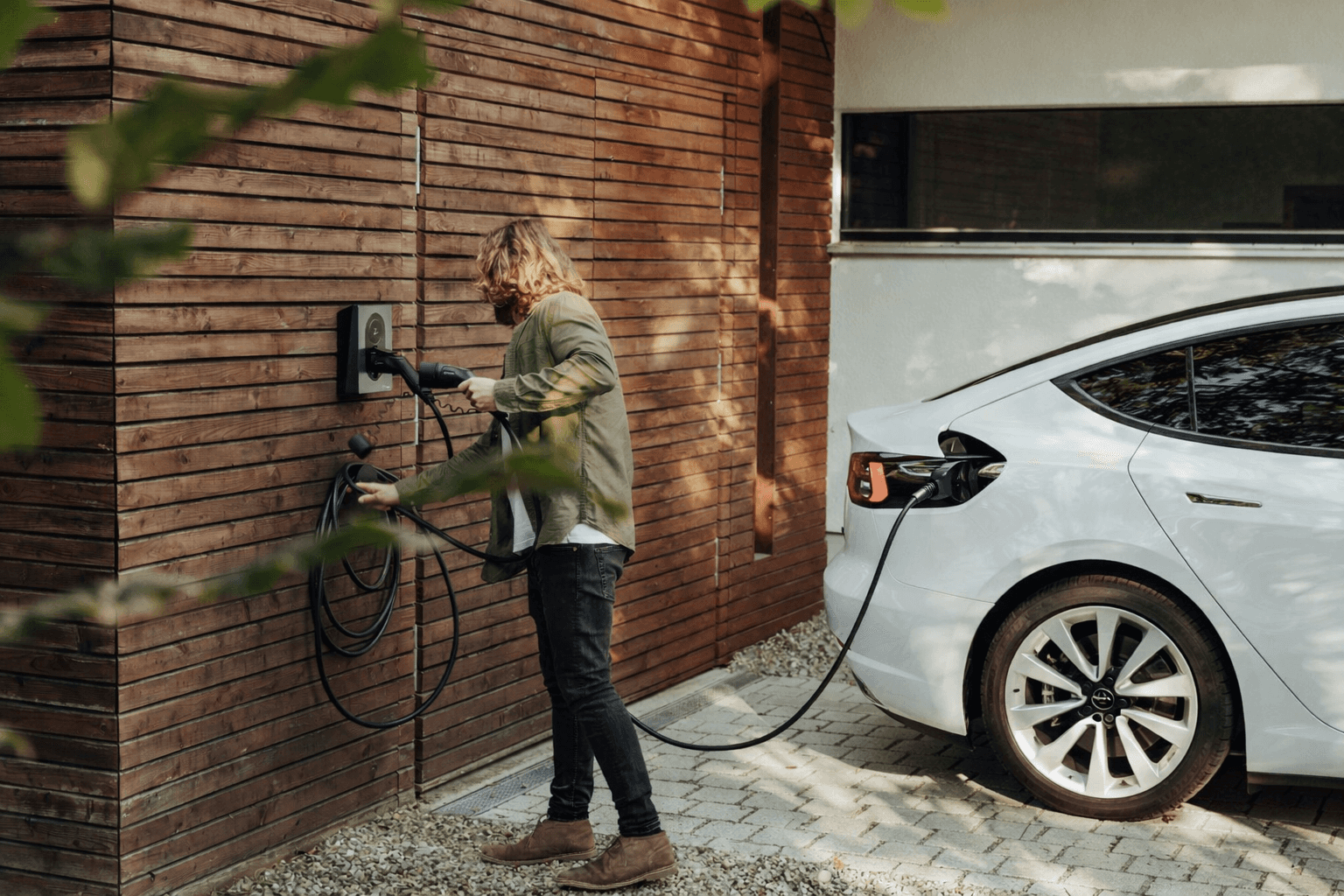
I shifted the experience from showing data to guiding action. For example, if the system notices that Supercharging makes up a high share of charging sessions, the UI does not just flag the behavior. It gives users a clear next step, like trying to charge at home more often when possible.
Building maintenance confidence
The goal was to help users feel more in control of their car’s long-term health. By offering guidance based on their climate, charging style, and usage patterns, the experience helps users move from passively watching battery data to actively maintaining their vehicle.
Education Through Action
Data is only useful when it helps users understand what to do next. For Teri, I designed the battery experience to move beyond passive reporting and turn complex battery signals into clear, practical driving habits.
Explaining the cause
Instead of only showing a drop in range, the experience helps users understand what may be affecting their specific car, such as weather, charging habits, or driving behavior. By showing the likely cause, the product reduces the mystery around battery degradation.
Guiding the next step
I shifted the experience from showing data to guiding action. For example, if the system notices that Supercharging makes up a high share of charging sessions, the UI does not just flag the behavior. It gives users a clear next step, like trying to charge at home more often when possible.
Building maintenance confidence
The goal was to help users feel more in control of their car’s long-term health. By offering guidance based on their climate, charging style, and usage patterns, the experience helps users move from passively watching battery data to actively maintaining their vehicle.
Context-Aware Controls
Most Tesla apps, including the official one, rely on a static control panel. It works, but users still have to know what they need, find the right control, and take action at the right moment. I explored a more context-aware layer that could surface relevant controls or suggestions based on the car’s state, environment, and repeated user behavior.
Environment-aware actions
Instead of showing the same fixed list of controls at all times, the experience can respond to the current context. For example, when the temperature drops below 28°F, battery and cabin warming are promoted to the primary UI layer, so cold-weather care is easier to notice and act on when it matters.
Routine recognition
The system can also learn from repeated manual actions. If a user often preheats the car at 7:00 AM on workdays, the app can suggest a one-tap automation. This shifts the experience from manual control to timely support, while still letting the user decide whether to accept, ignore, or dismiss the suggestion.
Why it matters
The value is not just fewer taps. It is making the app useful at the moment of need. By surfacing the right action at the right time, the product becomes more relevant to daily ownership and creates a stronger reason for users to return beyond checking raw vehicle data.
Context-Aware Controls
Most Tesla apps, including the official one, rely on a static control panel. It works, but users still have to know what they need, find the right control, and take action at the right moment. I explored a more context-aware layer that could surface relevant controls or suggestions based on the car’s state, environment, and repeated user behavior.
Environment-aware actions
Instead of showing the same fixed list of controls at all times, the experience can respond to the current context. For example, when the temperature drops below 28°F, battery and cabin warming are promoted to the primary UI layer, so cold-weather care is easier to notice and act on when it matters.
Routine recognition
The system can also learn from repeated manual actions. If a user often preheats the car at 7:00 AM on workdays, the app can suggest a one-tap automation. This shifts the experience from manual control to timely support, while still letting the user decide whether to accept, ignore, or dismiss the suggestion.
Why it matters
The value is not just fewer taps. It is making the app useful at the moment of need. By surfacing the right action at the right time, the product becomes more relevant to daily ownership and creates a stronger reason for users to return beyond checking raw vehicle data.

Impact
This work shifted the app from passive monitoring to guided ownership. By turning battery data into clear explanations, timely suggestions, and practical next steps, the experience gave users more confidence in how to care for their vehicle and created stronger ongoing value for a premium subscription.
Impact
This work shifted the app from passive monitoring to guided ownership. By turning battery data into clear explanations, timely suggestions, and practical next steps, the experience gave users more confidence in how to care for their vehicle and created stronger ongoing value for a premium subscription.
Takeaway
Long-term retention comes from utility that compounds over time. For Teri, that meant making complex vehicle data understandable, surfacing what matters at the right moment, and automating routine actions while keeping users in control.
The experience needed to support both the owner who just wants things handled and the owner who wants to understand every detail.
Takeaway
Long-term retention comes from utility that compounds over time. For Teri, that meant making complex vehicle data understandable, surfacing what matters at the right moment, and automating routine actions while keeping users in control.
The experience needed to support both the owner who just wants things handled and the owner who wants to understand every detail.
Takeaway
Long-term retention comes from utility that compounds over time. For Teri, that meant making complex vehicle data understandable, surfacing what matters at the right moment, and automating routine actions while keeping users in control.
The experience needed to support both the owner who just wants things handled and the owner who wants to understand every detail.
Other Cases
Other Cases